

How to Choose Outdoor Landscape Lighting Colors: Warm White vs. Cool White
Outdoor lighting possesses the unique ability to completely rewrite the architectural narrative of a property the moment the sun sets. A strategically executed illumination layout does far more than provide basic visibility; it accents hidden textures, builds depth, heightens security, and elevates a property's night-time drive-by appeal. However, one of the most critical decisions a homeowner faces during the design phase is selecting the correct color temperature for their LED fixtures.
The ongoing debate between warm white landscape lighting and cool white landscape lighting is a central consideration for any custom property upgrade. While both spectral profiles offer unique aesthetic and functional advantages, selecting the wrong Kelvin output can clash with your home’s exterior finishes and make your high-end landscaping look unnatural. Understanding the underlying science of light color ensures your illumination system highlights your property perfectly.
What Is Color Temperature in Outdoor Systems?
In the lighting industry, color temperature dictates the relative warmth or coolness of a light source and is measured quantitatively using the Kelvin scale (K). Lower Kelvin ratings indicate a warmer, amber-toned light source, while elevated ratings trend toward a crisp, blue-tinted output. When reviewing professional architectural systems, the spectrum is broken down into three primary operational tiers:
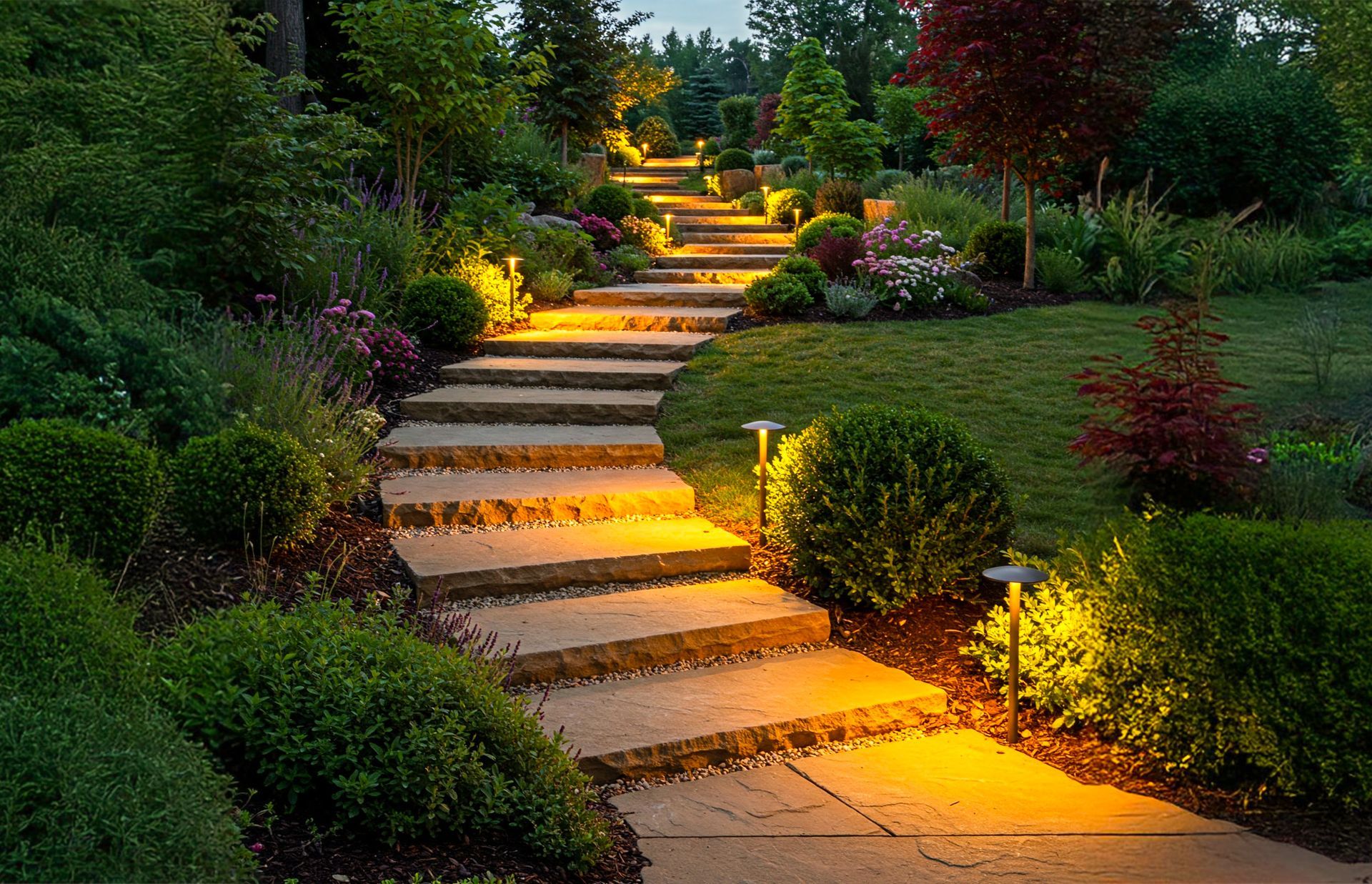
- 2700K to 3000K (Warm White): This spectrum delivers a soft, golden radiance that mimics traditional incandescent bulbs, creating an inviting, soft-focused environment.
- 3500K to 4000K (Natural White): A neutral, clean output that features minimal yellow or blue tinting, offering precise color accuracy.
- 5000K to 6500K (Cool White): A high-intensity, stark blue-white light that mimics bright daylight, creating intense contrast and high visibility.
The Architectural Impact of Warm White Landscape Lighting
Producing a rich, ambient golden glow, warm white fixtures are widely considered the gold standard for residential properties. This specific color temperature evokes a deep psychological sense of hospitality, comfort, and upscale elegance. Because it casts a softer, more forgiving beam, it flows naturally across organic surfaces without washing out textures or creating harsh, blinding glare.
This warm spectrum is exceptionally effective when casting light onto traditional building materials like red brick, natural stone, timber accents, and stucco. It complements the earth tones of residential architecture rather than fighting them. When deployed as pathway downlighting, patio wash lighting, or low-intensity uplighting along front entrances, it bathes the property in a premium, resort-style glow that makes the home feel deeply welcoming.
The Modern Cleanliness of Cool White Landscape Lighting
On the opposite side of the spectrum, cool white fixtures deliver a sharp, highly piercing beam that prioritizes high contrast and absolute clarity. This color temperature strips away all amber hues, offering a stark, contemporary look that commands immediate attention. While it can easily look cold and clinical if misapplied to a traditional home, it serves as a powerful artistic tool when paired with the right structures.
Cool white lighting is uniquely optimized for ultra-modern architecture, industrial commercial facades, and minimalist, geometric landscapes. It beautifully accents stark white concrete, stainless steel fixtures, glass panels, and dark slate finishes. Because higher Kelvin temperatures cut through darkness with intense clarity, this spectrum is also heavily utilized for commercial security lighting, high-lumen perimeter floodlights, and structural accenting along massive commercial structures.
Evaluating Your Foliage and Hardscape Variables
An expert outdoor landscape lighting system must treat the property's living elements as a dynamic canvas. Different color temperatures interact uniquely with the natural pigments found in plant leaves and hardscape elements. Introducing the wrong wavelength can wash out vibrant gardens or make premium stonework look dull and artificial.
As a core design rule, warm white light pairs naturally with mature trees, delicate flower beds, and earth-toned retaining walls because the gold undertone enriches the deep greens and autumn colors of the foliage. Conversely, cool white light is uniquely suited to illuminate ornamental blue-green grasses, modern pools, and geometric water features. The high Kelvin temperature interacts with moving water to create an icy, crystal-clear shimmer, transforming a backyard pond or waterfall into a dramatic focal point.
Combining Light Temperatures for Balanced Depth
One of the most persistent misconceptions in residential design is that you must choose a single color temperature for your entire property. The most sophisticated, multi-dimensional systems frequently leverage a combination of both spectrums to create visual depth and separate different functional zones. By strategically layering temperatures, a professional designer can guide the eye across your property's exterior features.
For example, a premium plan might utilize a soft 2700K warm wash around your backyard living areas, outdoor kitchens, and seating alcoves to promote a relaxing social atmosphere. Simultaneously, the system can integrate a clean 4000K neutral or cooler light hidden high within the canopy of massive oak trees to cast down through the branches—a professional technique known as moonlighting. This multi-Kelvin approach creates a highly dynamic layout that perfectly balances structural safety with artistic luxury.
Elevate Your Curb Appeal with NextGen Christmas Decor
Designing a flawless landscape lighting layout requires deep technical expertise, precision beam angle planning, and an understanding of electrical load balancing. Installing cheap, mismatched DIY box-store fixtures frequently leads to uneven hotspots, exposed wiring hazards, and lighting that compromises your home’s aesthetic. Partnering with a professional team ensures your home’s night-time transformation is seamless, safe, and striking.
At NextGen Christmas Decor, we excel at transforming premium properties into nighttime showcases. Our comprehensive process goes far beyond holiday setups; we specialize in designing and installing high-end, commercial-grade architectural lighting and permanent landscape illumination tracking. We balance proper Kelvin selections with low-voltage safety parameters to highlight your home’s unique architecture. Reclaim your property after dark—contact our outdoor lighting experts today to schedule your design evaluation and discover the power of customized illumination.
Which Kelvin temperature is best for a traditional residential home?
For standard residential properties featuring brick, stone, or wood siding, a warm white temperature between 2700K and 3000K is highly recommended. This spectrum enriches natural earth tones and creates a luxurious, welcoming ambiance without casting harsh shadows.
When should I choose cool white landscape lighting for my property?
Cool white lighting (4000K to 5000K+) is ideal if your home features ultra-modern, minimalist architecture with clean lines, white siding, or industrial metal finishes. It is also highly effective for commercial security zones and illuminating modern water features.
Can you mix warm white and cool white lights on the same property?
Yes, when done intentionally. A professional layout can use warm lighting around social patios and front entryways to foster comfort, while using a neutral or cooler daylight tone high up in tree canopies to create a realistic moonlighting effect across the lawn.
How does color temperature affect the appearance of trees and plants?
Warm white light brings out the rich textures of tree bark and the warm tones of autumn foliage. Cooler lighting can wash out earth tones, but it accents the silvery, blue-green hues of specific ornamental evergreens and grasses.
Will choosing higher Kelvin cool white lights make my yard safer?
Not necessarily. While cool white light is exceptionally bright, safety depends entirely on fixture placement, beam spread, and glare reduction. A well-placed warm white pathway system provides excellent visibility and security without blinding guests.